Native British Wildflowers for Small Gardens: A Beginner's Guide
A wildflower patch does not need half an acre and a tractor. Some of the best native plants for bees, butterflies and moths are compact, quietly good-looking, and perfectly happy in a 30cm pot on a sunny patio. The trick is choosing species that suit the space you actually have, rather than trying to force a hay meadow into a window box.
Why native wildflowers earn their space
Our native plants have spent a very long time getting used to British weather, British soils and British insects. That shows in how little they ask of you. Most will cope with the poor, thin, gravelly ground that new-build gardens and containers tend to offer, and once they are established they rarely need feeding or much watering.
They also feed things nothing else quite does. A native oxeye daisy or wild marjoram brings in bees, hoverflies and butterflies that simply ignore many of the flouncy bedding plants on the garden centre bench. Add in the fact that several will self-seed politely once they like you, and you have a patch that improves with neglect rather than despite it.
Ten natives that cope with pots and tight borders
Start with three or four of these rather than the whole list. All are widely available as seed or plugs, and none needs specialist kit.
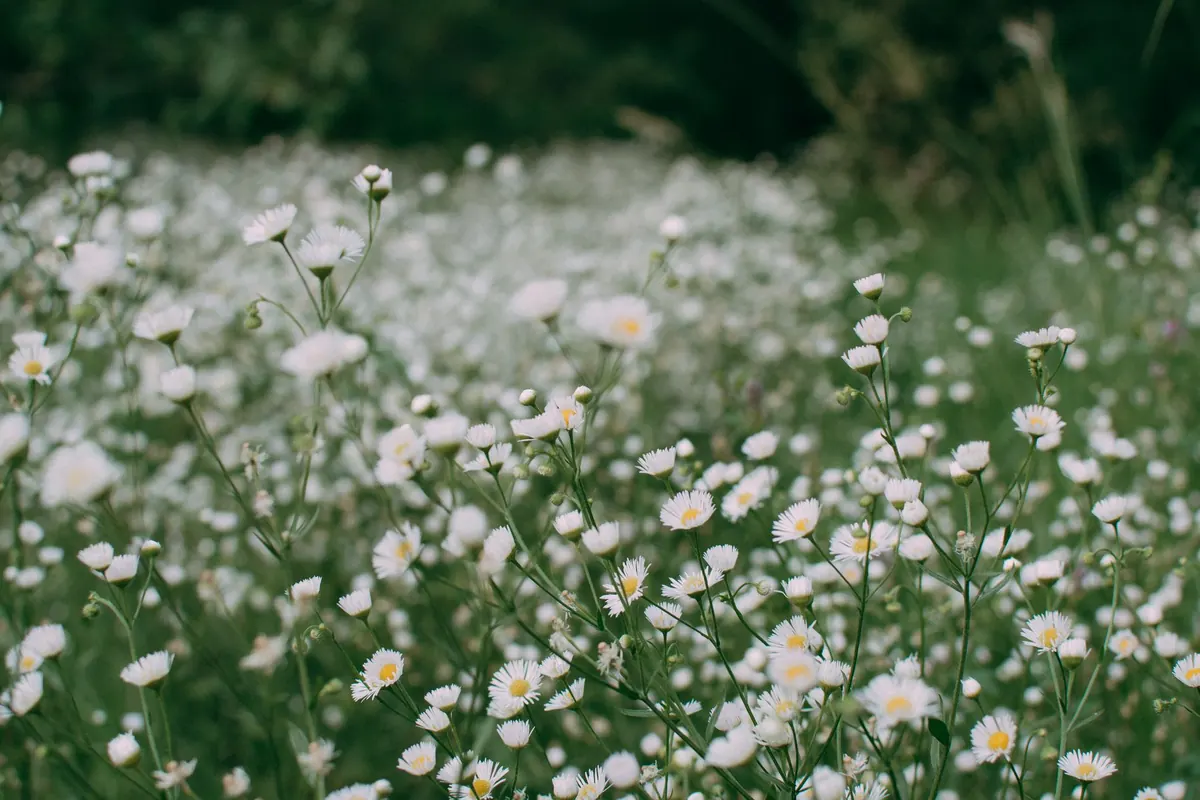
- Oxeye daisy (Leucanthemum vulgare) — cheerful white daisies from late spring into summer. Give it a five-litre pot or more, as it spreads steadily.
- Yarrow (Achillea millefolium) — feathery grey-green leaves and flat pink or white flowerheads. Drought-proof and excellent in gravel or a hot pot.
- Selfheal (Prunella vulgaris) — very low, purple, and happy to creep along the front of a border. Tolerates being walked past.
- Wild marjoram (Origanum vulgare) — aromatic, pink, a magnet for butterflies. Wants sharp drainage and sun.
- Salad burnet (Sanguisorba minor) — neat rosettes of cucumber-flavoured leaves topped with small maroon drumsticks. Takes a hard cut in its stride.
- Common knapweed (Centaurea nigra) — thistle-like purple flowers that insects adore. Better in a border than a small pot.
- Small scabious (Scabiosa columbaria) — soft lilac pincushions on slender stems; the compact cousin of field scabious and far better suited to containers.
- Red campion (Silene dioica) — pink, long-flowering and one of the few natives here that is genuinely happy in dappled shade.
- Foxglove (Digitalis purpurea) — a biennial, so it flowers in its second year, then self-seeds into gaps. Superb for shade and for bumblebees.
- Cornflower and common poppy — annuals that give you a fast, cheap splash of colour in a bare pot or a strip of cleared ground while slower perennials settle in.
Match the plant to your soil and light
This is where most small wildflower projects go wrong. Meadow plants evolved on land that was grazed, cut and never fertilised, so rich soil makes them flop, grow leafy and flower poorly. Do not fill your pots with heavily enriched multipurpose compost, and do not add fertiliser at any point.
A loam-based compost mixed roughly half and half with horticultural grit or coarse sand suits most of the plants above. In a border, if the ground is dark and crumbly and grows excellent brassicas, it is probably too fertile; dig in grit and composted bark to open it up, or grow your wildflowers in raised containers instead.
Light matters just as much. Oxeye daisy, yarrow, marjoram, knapweed and scabious all want a sunny spot — six hours or more in summer. Red campion, foxglove and selfheal will take partial shade, and foxgloves will manage in quite deep shade under a hedge.
Sowing and planting: what actually works
Annuals
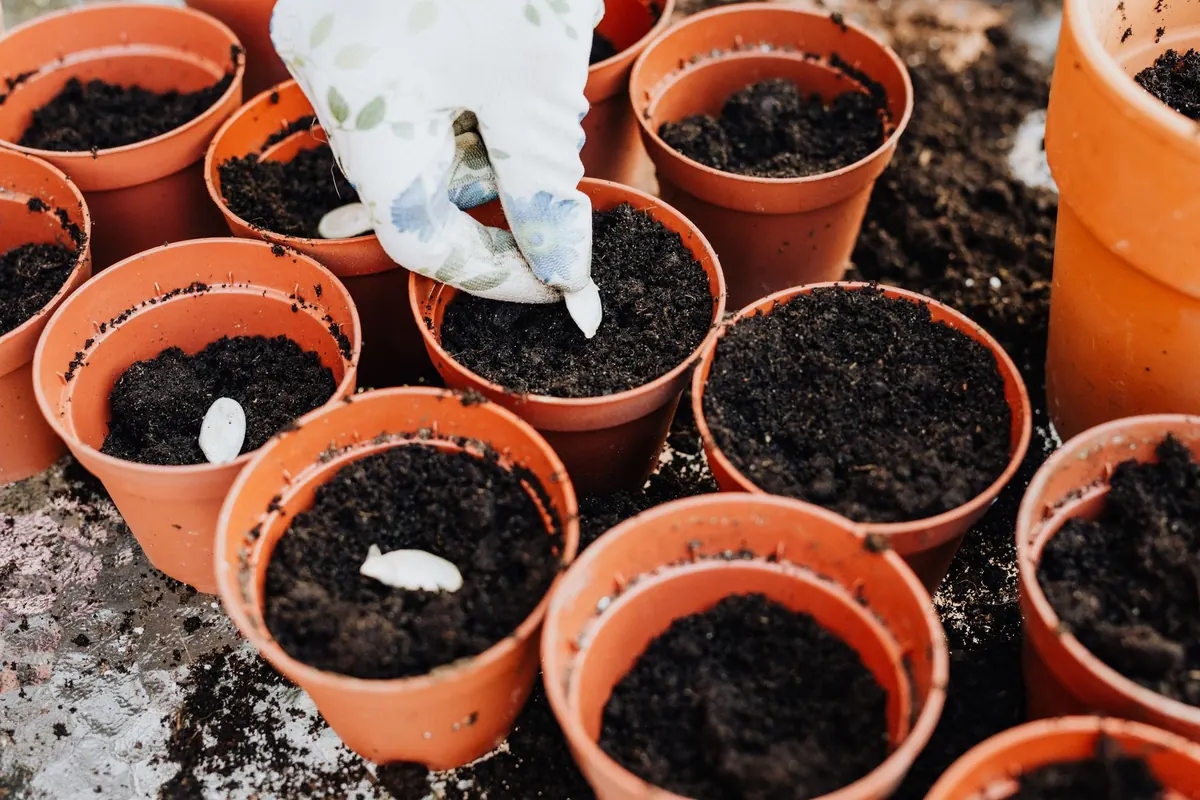
Cornflower, poppy and corn marigold need bare, disturbed ground and light to germinate. Scatter seed thinly on the surface in spring or early autumn, press it in with a board or the flat of your hand, and water gently. Do not bury it. Thin the seedlings so they are roughly 15cm apart, and you will get far more flowers than from a crowded sowing.
Perennials from seed
Many native perennials need a spell of cold and damp before they will germinate — a process called stratification. The simplest way to give them that is to sow in September or October in a pot or seed tray, leave it outside, and be patient. Germination may not happen until the following spring.
If you sow in spring instead, mix the seed with a little damp sand in a sealed bag and keep it in the fridge for four to six weeks before sowing. Surface-sow most species; only cover with a fine dusting of grit, as many need light.
Rule of thumb: sow thin, keep damp, and resist the urge to fuss. A crowded tray of wildflower seedlings almost always turns into a disappointing, mildewy mess.
Plugs and small plants
Plugs are the quickest route to a result. Plant them out in autumn or early spring, water them in, and keep them watered through their first summer. Space perennials about 25–30cm apart in a border, or one plant per 3–5 litre pot.
Looking after a small wildflower patch
Water new plants through their first growing season, then only during genuinely dry spells. Containers dry out much faster than borders, so check pots weekly in summer by pushing a finger into the compost.
Cut perennials back once in late summer, after the flowers have set seed and you have enjoyed the seed heads for a week or two. Rake off every clipping — if you leave them lying, you feed the soil and your wildflowers will grow soft and floppy. On light, poor ground a single cut in August or early September is enough; on richer soil, cut again in late spring.
Never cut the whole patch at once. Leave a corner standing through winter for seed-eating birds and for insects that shelter in hollow stems. Divide congested pot-grown plants every two or three years in autumn, and top-dress with grit rather than compost.
Buying seed and plants without harming wild populations
Buy from nurseries that state British native origin and, where possible, provenance close to your area. Never dig plants from the wild or take seed from nature reserves and verges — uprooting wild plants without the landowner's permission is against the law in the UK, and some species, including native bluebells, are protected outright.
Be careful with bluebells in particular: much of what is sold is the vigorous Spanish species or a hybrid, which crosses with our native bluebell where it escapes. Check the label, or leave bluebells for a woodland garden and stick to the plants listed above.
Start with one pot
Begin with a single large container of yarrow or wild marjoram in the sunniest spot you have, sown or planted this autumn. Watch what visits it, then add a second pot next year. Small native patches are easy to expand and easy to change if something sulks, and within two or three seasons you will have more bees in the garden than you had any right to expect from a few square feet.
Photo: Svetlana Tumina / Pexels
Raised Bed vs Container Gardening: Which Is Better for UK Patios?
Raised beds and containers both work on a UK patio, but they differ in cost, watering, yield and space....
Plants for a Pollinator-Friendly Balcony in Shade: A Comparison
A practical comparison of shade-tolerant pollinator plants for UK balconies, covering pot sizes, watering...
About Us